
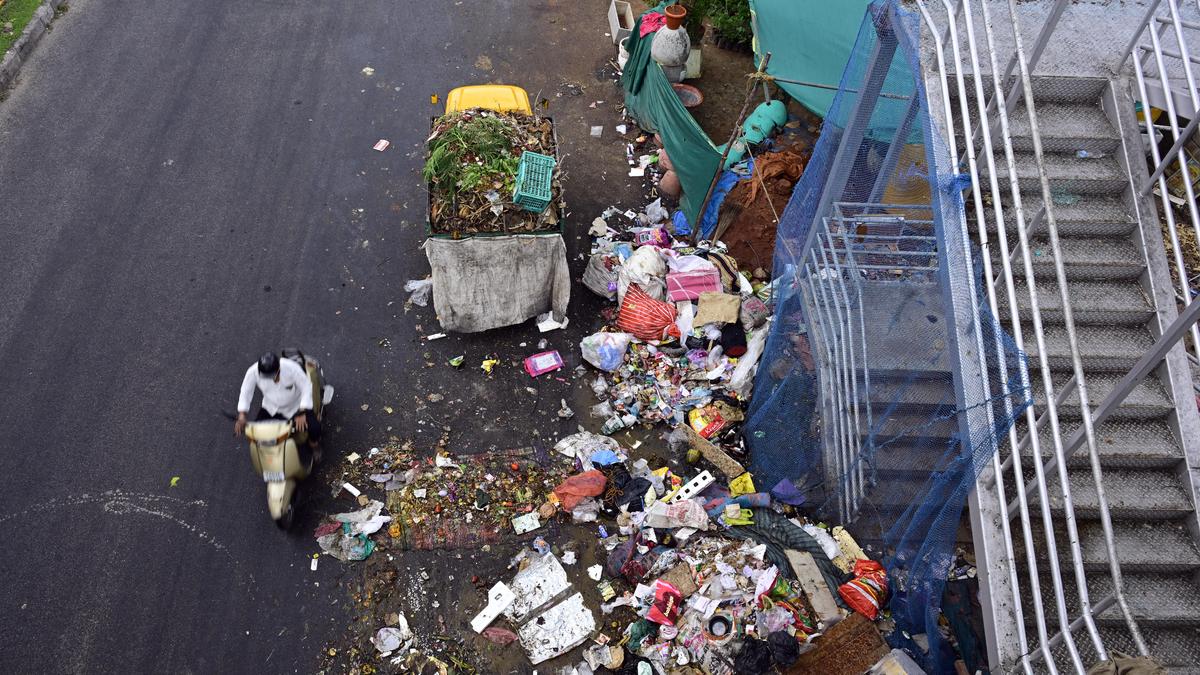

While Bengaluru’s daily waste generation is crossing 5,880 tonnes, the city is able to process only about 4,105 tonnes, leaving a shortfall of 1,775 tonnes every day.To bridge the gap, GBA, the five corporations and BSWML have planned a sweeping overhaul of the waste-management system that includes new processing facilities, separate mechanisms for construction and demolition (C&D) waste, bulky waste and animal waste, and a restructuring of garbage collection and transportation. Of the 1,775 tonnes of waste that the city is unable to process every day, wet waste makes up the largest share at 677 tonnes, followed by dry waste at 545 tonnes. The proposal was recently discussed with Bengaluru Development Minister Krishna Byre Gowda. As part of the proposed overhaul, a new model – only for collection and transportation (C&T), comprising 33 contract packages has been envisaged, with an estimated annual expenditure of ₹619 crore, amounting to about ₹5,040 crore over seven years. The model would replace the existing system that relies on hundreds of supply agencies with larger, division-based contract packages. Gap between generation and processing: 1,775 tonnes per day (TPD) C&D waste: 6,000 TPD generated versus 2,050 TPD capacity
Legacy waste: 36.5 lakh MT still pending at single site Biomethanation plants — 16 Operational: 6 Under construction/defunct: 10 Total planned mini transfer stations — 26Not functional/not operational: 7 Patchy collectionOfficials told The Hindu that on the ground, about 5,020 auto-tippers and nearly 600 compactors have been operating, with each auto serving nearly 750 to 1,000 households. The system was brought in to scale up the coverage but it has become fragmented and difficult to streamline under a unified operational model, an official said, pointing that many vehicles are not going for collection, almost all are without GPS, and many are going to only a few areas and not covering all assigned routes. All this is leading to patchy collection. Processing level is another crucial point, and the current solid waste management infrastructure shows “stress points”, the official said. He added that Bengaluru has a combined waste processing capacity of a little over 4,100 tonnes per day, but utilisation is uneven. Defunt, under construction“Of the 16 biomethanation plants meant for decentralised wet waste treatment, only six are currently operational, while six are defunct and the rest are under construction. Similarly, of the planned 26 mini transfer stations, seven are not functional, and out of 30 larger transfer stations which were set up to improve secondary movement of waste, only three are operational at present,” the official said. Apart from operational and collection challenges, the official said that a persistent problem is legacy waste. “The city carries a heavy legacy burden, with about 36.5 lakh metric tonnes of accumulated waste at Bellahalli alone, while remediation work is ongoing at multiple old dump sites across the city,” the official said. “Construction and demolition waste remains another major pressure point, with around 6,000 tonnes generated every day against a processing capacity of only about 2,050 tonnes,” the official said, adding that gap in C&D waste has also lead to discussions where proposals are outlined to expand treatment facilities significantly under PPP model. Dry wasteEven dry waste management is still far from a functioning recycling system, the official lamented, pointing that the city has 124 dry waste collection centres, but together they can handle only about 266 tonnes of waste a day, a fraction of what is generated. “As a result, most dry waste, especially low-value plastic that cannot be easily recycled, does not stay within any local processing chain. Instead, around 1,100 tonnes of such waste is pushed out daily to waste-to-energy plants and cement factories, where it is ultimately burnt or co-processed rather than recycled back into use,” the official added. Published – June 19, 2026 05:46 pm IST
Source link
