
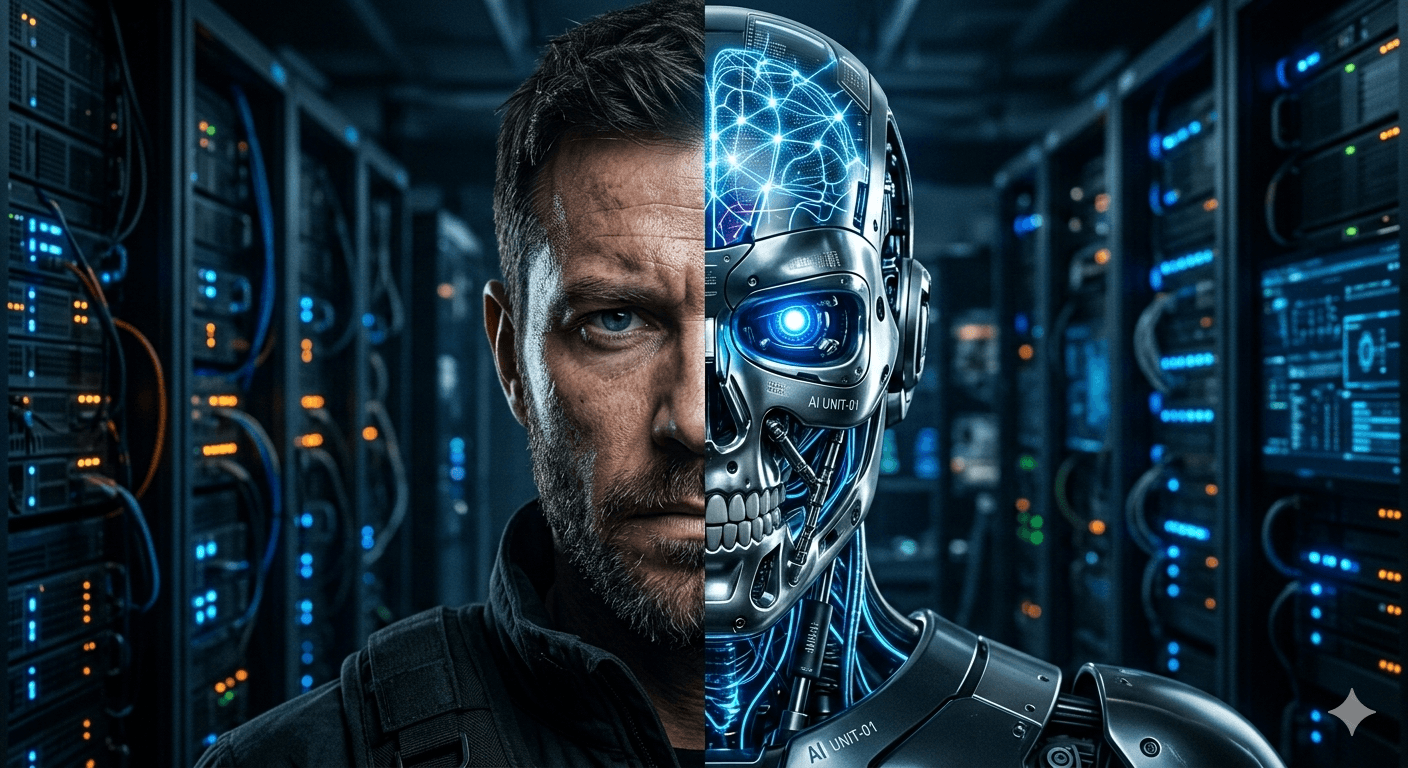

AI vs Humans: The Future of Intelligence in 2026 and Beyond
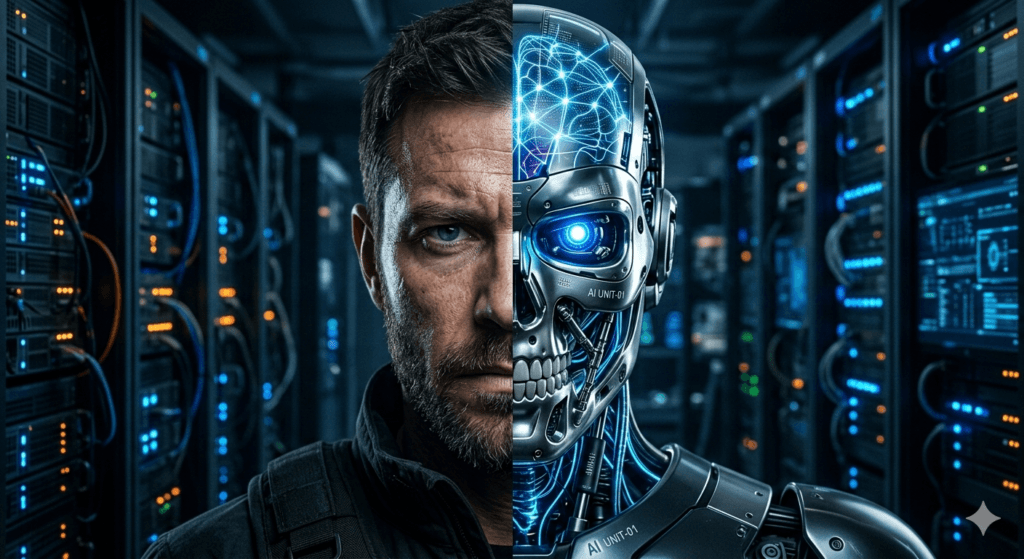
The debate between Artificial Intelligence (AI) and humans has become one of the most important conversations of the modern technological era. AI is no longer science fiction — it is part of daily life. From smartphones and recommendation systems to autonomous vehicles and advanced medical diagnostics, AI is transforming how the world works.
But this rapid progress raises a fundamental question: Will AI replace humans, or will AI enhance human capabilities? Understanding the relationship between AI and human intelligence is crucial for individuals, businesses, and society as a whole.
What is Artificial Intelligence?
Artificial Intelligence refers to computer systems designed to perform tasks that normally require human intelligence. These tasks include learning, reasoning, decision-making, language understanding, image recognition, and problem solving.
AI works using algorithms, data, and computing power. Machine learning allows systems to learn from data without explicit programming, while deep learning uses neural networks inspired by the human brain.
Today, AI is used in search engines, chatbots, fraud detection, healthcare analysis, customer service automation, and content generation.
What is Human IntelligeBlognce?
Human intelligence is complex, emotional, adaptive, and creative. It involves reasoning, emotional understanding, ethics, imagination, and consciousness.
Humans can understand context, make moral decisions, think abstractly, and create original ideas. Unlike AI, humans possess intuition, empathy, and real-world experience.
Human intelligence evolved through millions of years, allowing people to survive, innovate, and build civilizations.
Key Differences Between AI and Humans
1. Speed and Processing
AI can process massive amounts of data in seconds. Humans are slower but better at contextual understanding.
2. Learning Style
AI learns from datasets and patterns. Humans learn from experience, emotions, and reasoning.
3. Creativity
AI can generate content, but human creativity is driven by emotions, culture, and personal experience.
4. Emotions
AI does not feel emotions. Humans use emotions in decision-making and relationships.
5. Adaptability
Humans can adapt to unexpected situations better than AI systems trained for specific tasks.
Strengths of Artificial Intelligence
- High speed and accuracy
- 24/7 availability without fatigue
- Data analysis at massive scale
- Automation of repetitive tasks
- Consistency in performance
- Improved decision support
Industries like healthcare, finance, manufacturing, and marketing benefit greatly from AI automation and predictive analysis.
Strengths of Humans
- Emotional intelligence
- Creativity and innovation
- Ethical reasoning
- Complex problem solving
- Leadership and communication
- Contextual understanding
Human strengths are especially important in leadership, education, psychology, design, research, and strategy.
AI in Everyday Life
AI is everywhere — often invisible. Voice assistants answer questions, recommendation systems suggest content, and navigation apps optimize travel routes.
Businesses use AI for customer support chatbots, marketing automation, fraud detection, and analytics. Healthcare uses AI for early Future disease detection, imaging analysis, and drug discovery.
Social media platforms rely heavily on AI algorithms to personalize user experiences.
Will AI Replace Jobs?
One of the biggest concerns is job replacement. AI will automate repetitive and predictable tasks such as data entry, basic customer support, and routine analysis.
However, history shows that technology creates new jobs while transforming existing ones. The focus is shifting toward skills like creativity, critical thinking, AI management, and digital literacy.
The future workforce will likely be a collaboration between humans and AI rather than competition.
Human + AI Collaboration
The most powerful model is not AI vs Humans — it is AI with Humans.
AI can handle data processing and automation, while humans provide creativity, strategy, and ethical oversight. This collaboration increases productivity and innovation.
Examples include doctors using AI diagnostics, writers using AI assistants, and engineers using AI design tools.
AI and Creativity
AI can generate images, music, videos, and text. This raises questions about originality and authorship. While AI can assist creativity, human intention and storytelling remain essential.
The future of creativity will involve co-creation — humans guiding AI tools to produce better results faster.
Ethical Concerns of AI
- Bias in algorithms
- Privacy risks
- Job displacement fears
- Deepfakes and misinformation
- Over-reliance on automation
Responsible AI development requires transparency, regulation, and human oversight.
The Future of AI vs Humans
AI will continue to evolve rapidly with advancements in generative AI, robotics, and autonomous systems. Experts believe AI will augment human intelligence rather than replace it entirely.
The concept of “augmented intelligence” highlights collaboration where AI enhances human decision-making.
Education systems are already adapting to teach AI literacy and digital skills.
Industries Most Impacted
- Healthcare
- Finance
- Education
- Marketing
- Software development
- Manufacturing
- Customer service
These industries will experience productivity growth through AI-powered tools.
Skills Humans Need in the AI Era
- Critical thinking
- Creativity
- Emotional intelligence
- AI literacy
- Problem solving
- Adaptability
- Communication
The ability to work with AI tools will become a core skill across professions.
AI Limitations
Despite its power, AI has limitations. It depends heavily on data quality, lacks true understanding, and struggles with common sense reasoning.
AI also cannot replicate human consciousness, empathy, or moral judgment.
Why Humans Still Matter
Humans define goals, values, and purpose. Technology is a tool created by people. Innovation requires imagination, curiosity, and human vision.
Leadership, ethics, culture, and storytelling remain uniquely human strengths.
FAQ
Is AI better than humans?
AI is faster at data processing, but humans excel in creativity, emotions, and decision-making.
Will AI replace humans?
AI will replace some tasks but will mostly work alongside humans.
What jobs are safe from AI?
Creative, leadership, strategy, and human interaction jobs are safer.
Conclusion
The conversation should not be framed as AI versus humans but as AI alongside humans. AI is a powerful tool that can amplify human potential when used responsibly.
The future belongs to those who learn to work with AI rather than fear it. By combining machine efficiency with human creativity, society can unlock unprecedented innovation.
Ultimately, AI cannot replace what makes us human — emotion, meaning, purpose, and imagination. Instead, AI will reshape how humans work, create, and solve problems in the decades ahead.
